This dress is made from a vintage Indigo Kimono. Indigo or 藍染 Aizomé is derived from the Persicaria Tinctoria plant, and has long been revered for its beautiful hues and antibacterial properties. From plant to dye, it takes about a year to produce, which includes a fermentation process as well as a chemical reaction with oxygen, which creates the vibrant blue color. Aizomé, which has been perfected since before the 16th century has now become synonymous with Japanese textiles.
The dye method is called Katazome 型染め - a Japanese method of dyeing fabrics using a resist paste applied through a stencil, typically a rice flour mixture applied with a brush or a tool such as a palette knife. Stencils are used repeatedly to make a repeating pattern. Pigment is added by hand-painting, immersion dyeing, or both. The area of the fabric covered and permeated by the paste mixture resists the later application of dye, thus creating undyed areas within the fabric.
Traditionally, Kimonos are constructed from narrow bolts of silk that are cut into eight rectangular pieces, then folded and overlapped to fit the body. At any time, the pieces can be taken apart and sewn back together to accommodate weight fluctuations, or if the Kimono is passed onto another person with different height. This method does not produce any waste. As a nod to this zero-waste philosophy, the Zero-Waste Kimono Dress is made using the main body of the Kimono and features a v-neck in front and back.
The boxy shape of the dress lends itself to a loose fit, highlighting the beautiful drape of silk. The dress can be worn with or without a belt, which is made from the longest piece of the collar construction.
Fits up to US 16 with a lot of ease
Garment measurements
Bust/ Waist: 140cm /55 inches
Length: 125cm / 49 inches
100% silk
Dry clean
This dress is made from a vintage Indigo Kimono. Indigo or 藍染 Aizomé is derived from the Persicaria Tinctoria plant, and has long been revered for its beautiful hues and antibacterial properties. From plant to dye, it takes about a year to produce, which includes a fermentation process as well as a chemical reaction with oxygen, which creates the vibrant blue color. Aizomé, which has been perfected since before the 16th century has now become synonymous with Japanese textiles.
The dye method is called Katazome 型染め - a Japanese method of dyeing fabrics using a resist paste applied through a stencil, typically a rice flour mixture applied with a brush or a tool such as a palette knife. Stencils are used repeatedly to make a repeating pattern. Pigment is added by hand-painting, immersion dyeing, or both. The area of the fabric covered and permeated by the paste mixture resists the later application of dye, thus creating undyed areas within the fabric.
Traditionally, Kimonos are constructed from narrow bolts of silk that are cut into eight rectangular pieces, then folded and overlapped to fit the body. At any time, the pieces can be taken apart and sewn back together to accommodate weight fluctuations, or if the Kimono is passed onto another person with different height. This method does not produce any waste. As a nod to this zero-waste philosophy, the Zero-Waste Kimono Dress is made using the main body of the Kimono and features a v-neck in front and back.
The boxy shape of the dress lends itself to a loose fit, highlighting the beautiful drape of silk. The dress can be worn with or without a belt, which is made from the longest piece of the collar construction.
Fits up to US 16 with a lot of ease
Garment measurements
Bust/ Waist: 140cm /55 inches
Length: 125cm / 49 inches
100% silk
Dry clean

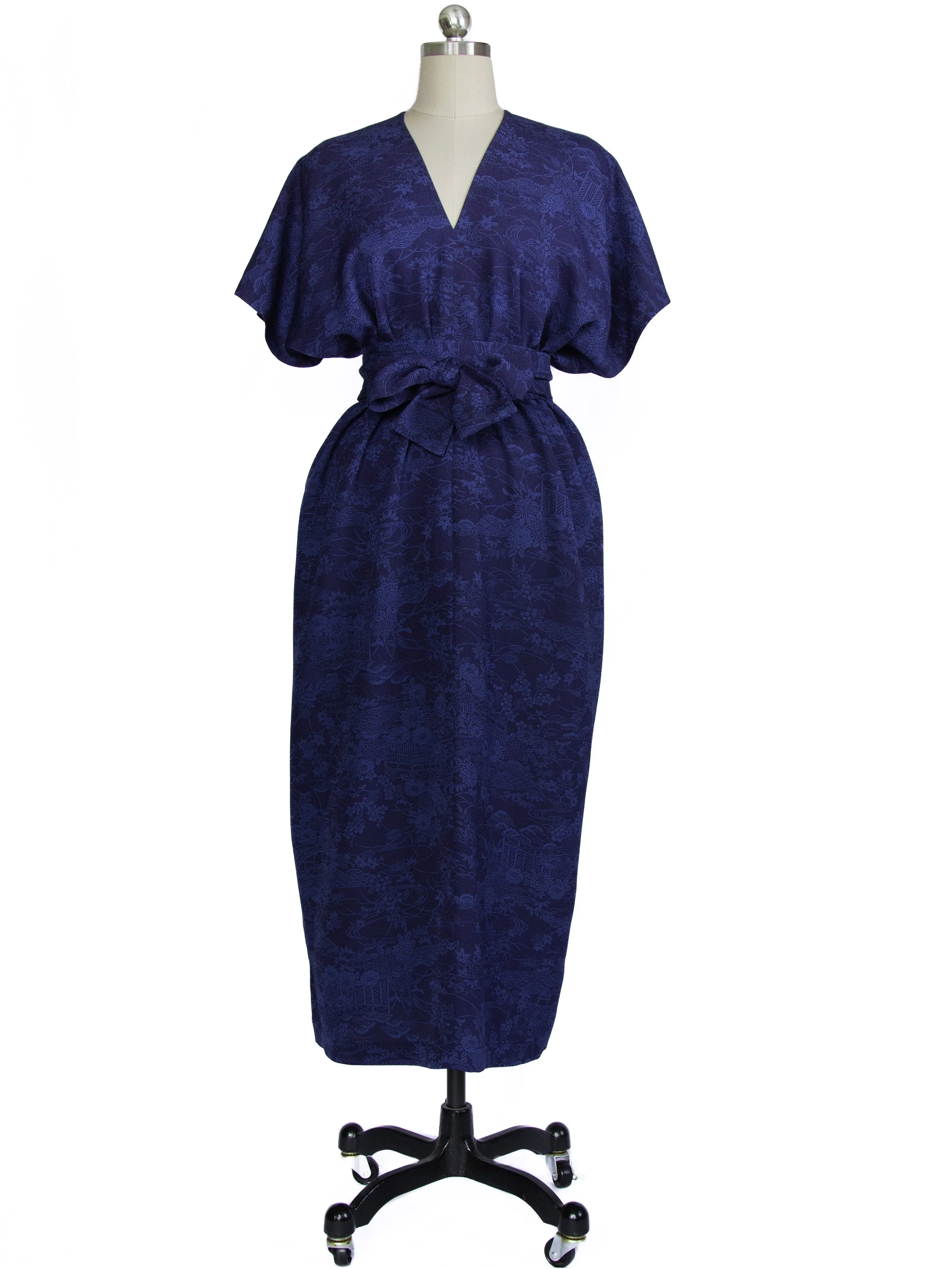 Image 1 of 6
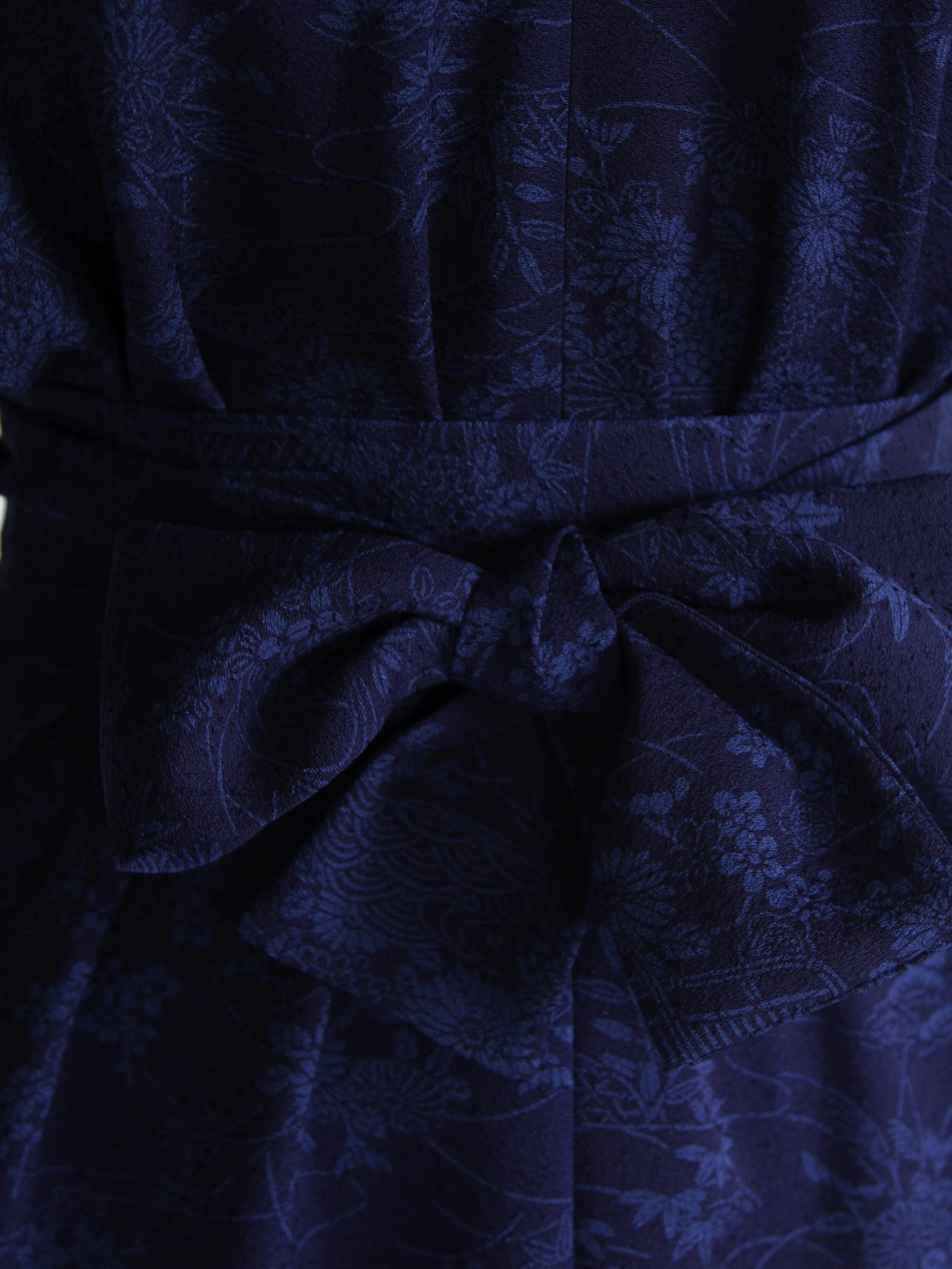 Image 2 of 6
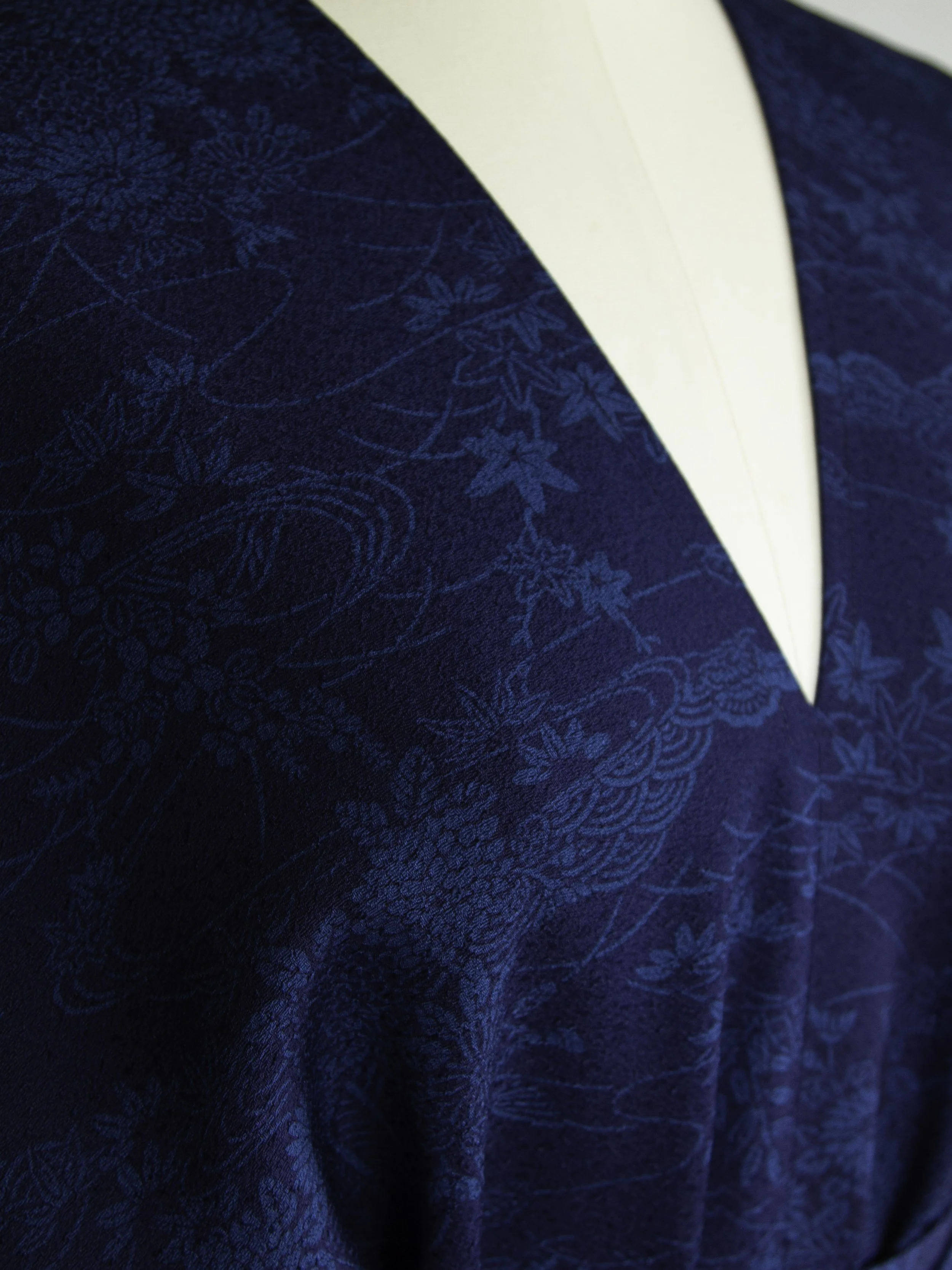 Image 3 of 6
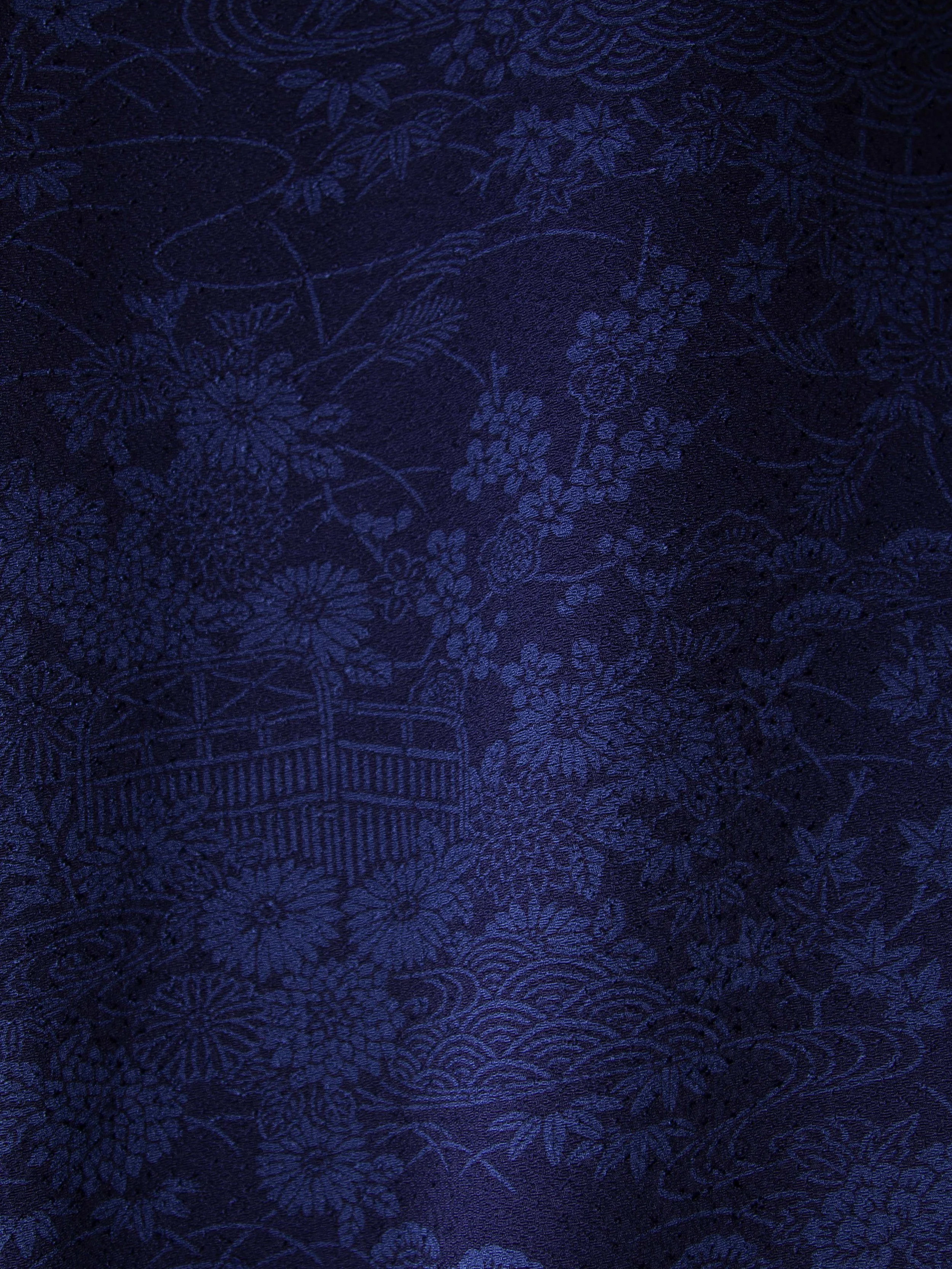 Image 4 of 6
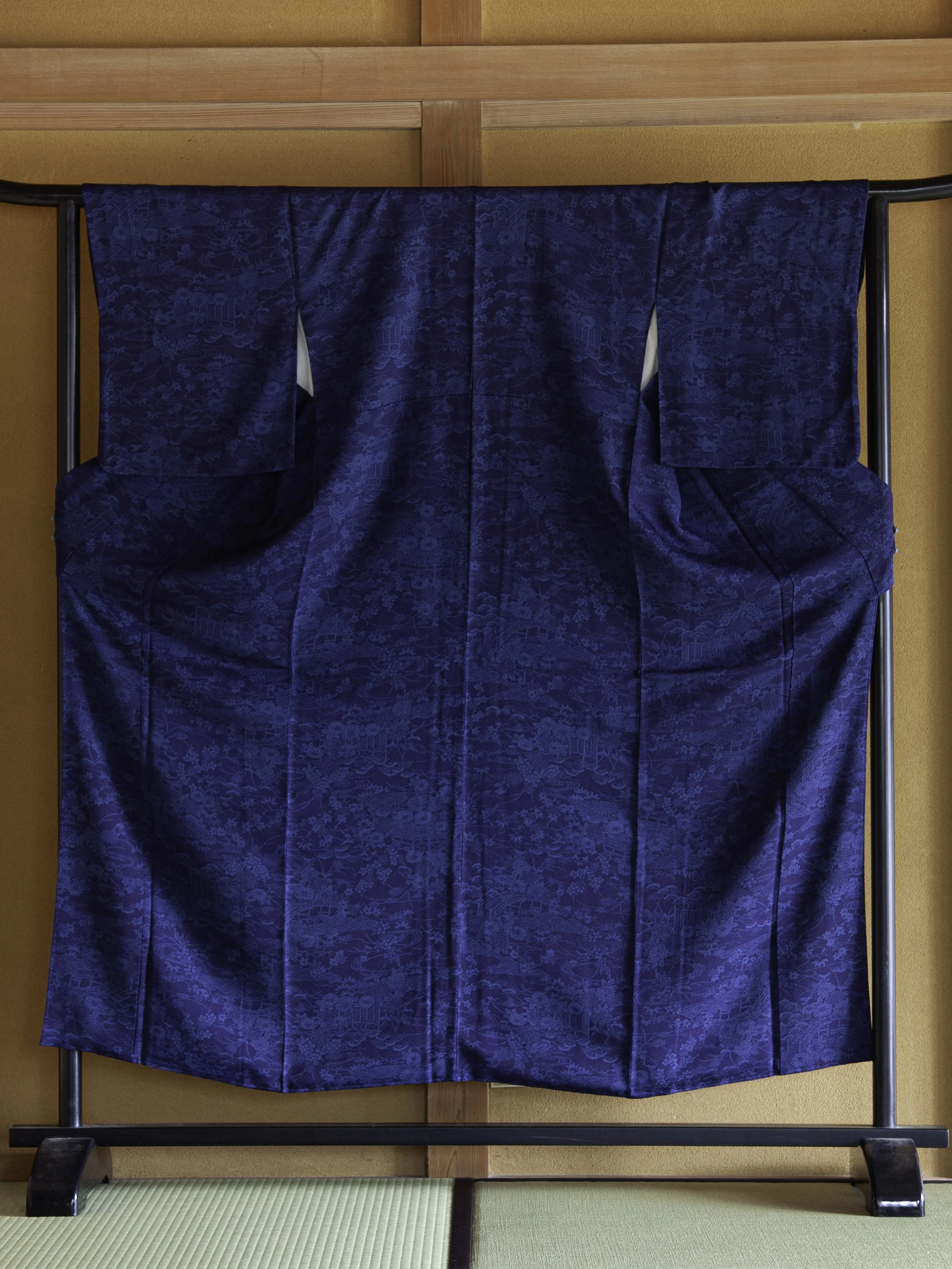 Image 5 of 6
 Image 6 of 6